

Embrace Tranquility: Designing Your Serene Japanese-Style Bedroom.

In our fast-paced world, finding a true sanctuary at home feels more important than ever. And when it comes to creating a space that whispers calm, encourages mindfulness, and promotes deep rest, few design philosophies rival the elegant simplicity of a Japanese-style bedroom.
More than just an aesthetic, this approach is about creating harmony – a peaceful retreat that nurtures the soul and grounds you in the present moment. If you’re dreaming of transforming your bedroom into a haven of tranquility, read on!
The Philosophy: Minimalism, Harmony, and Nature
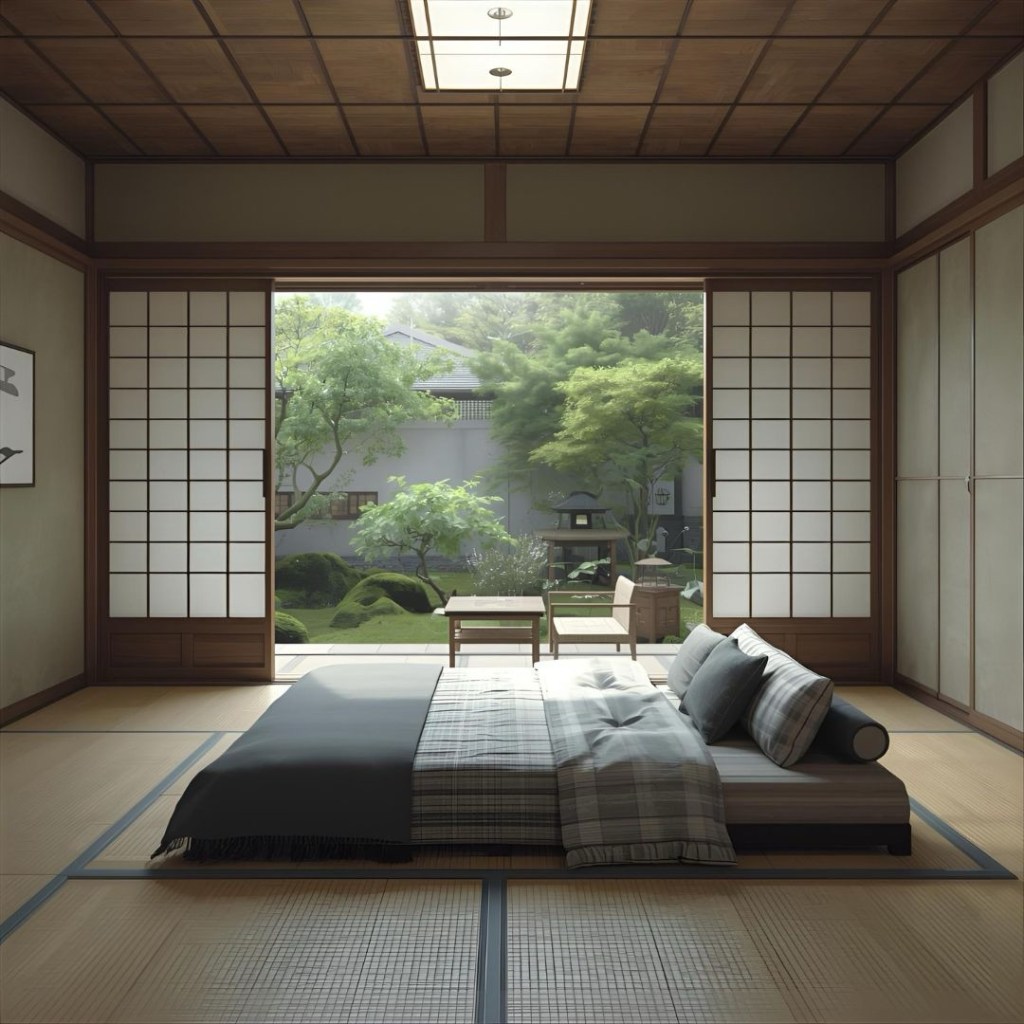
At its heart, Japanese design is rooted in principles that prioritize connection, balance, and intentional living. For a bedroom, this translates to:
Minimalism (Ma): Less is truly more. The focus is on essential items that serve a purpose and bring joy, eliminating clutter.
Harmony (Wa): Every element works together, creating a sense of peace and order.
Connection to Nature (Shizen): Bringing the outdoors in, using natural materials and light to foster a sense of calm.
Wabi-Sabi: Appreciating the beauty in imperfection, transience, and natural processes.
Key Elements of a Japanese-Style Bedroom

Ready to infuse your space with Zen serenity? Here’s how:
- The Bed: Low, Inviting, and Grounded
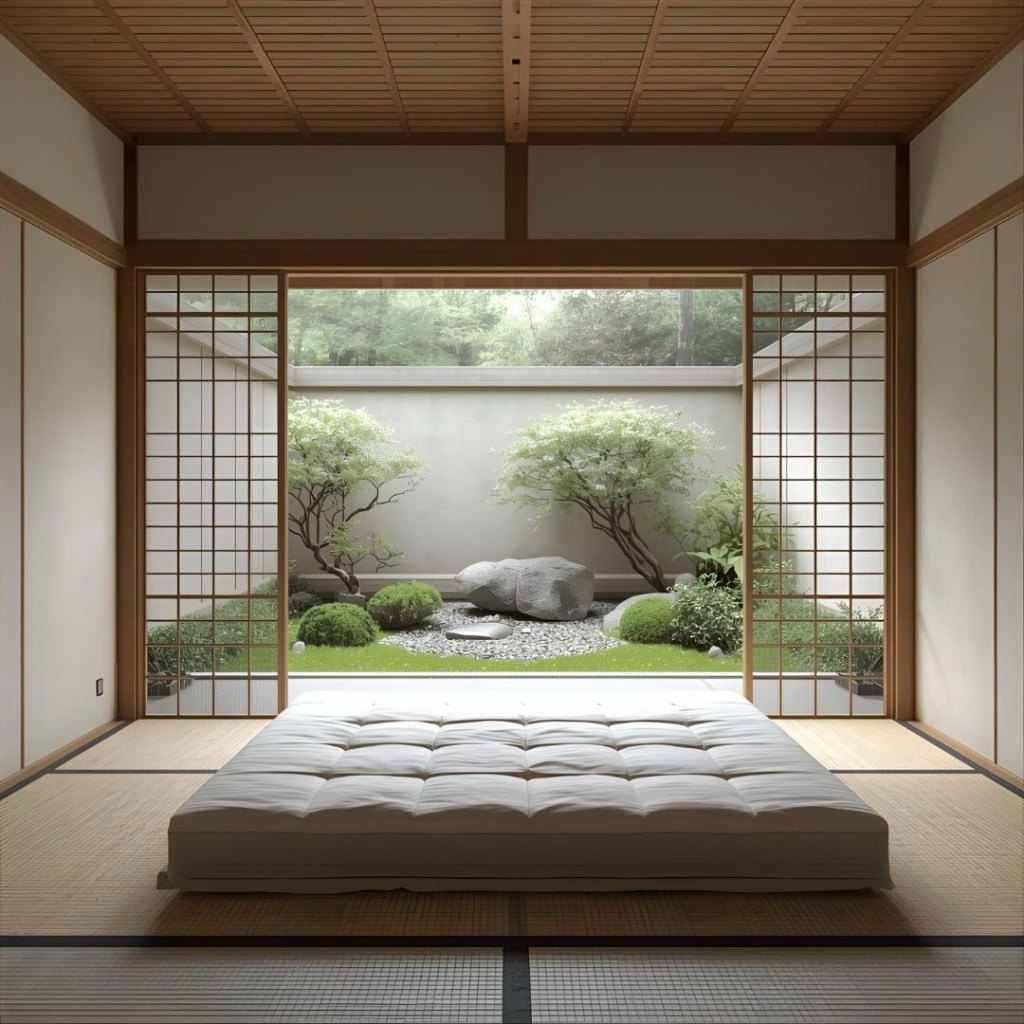
The most striking feature of a Japanese bedroom is often its low-profile sleeping arrangement.
Platform Beds: Opt for a low platform bed frame, often made from natural wood, that makes the room feel more expansive and closer to the earth.
Futon Mattresses: For ultimate authenticity, consider a shikibuton (traditional Japanese mattress) placed directly on tatami mats or a low platform. These are firm, supportive, and can often be folded away during the day to open up the room.
- Color Palette: Earthy and Soothing
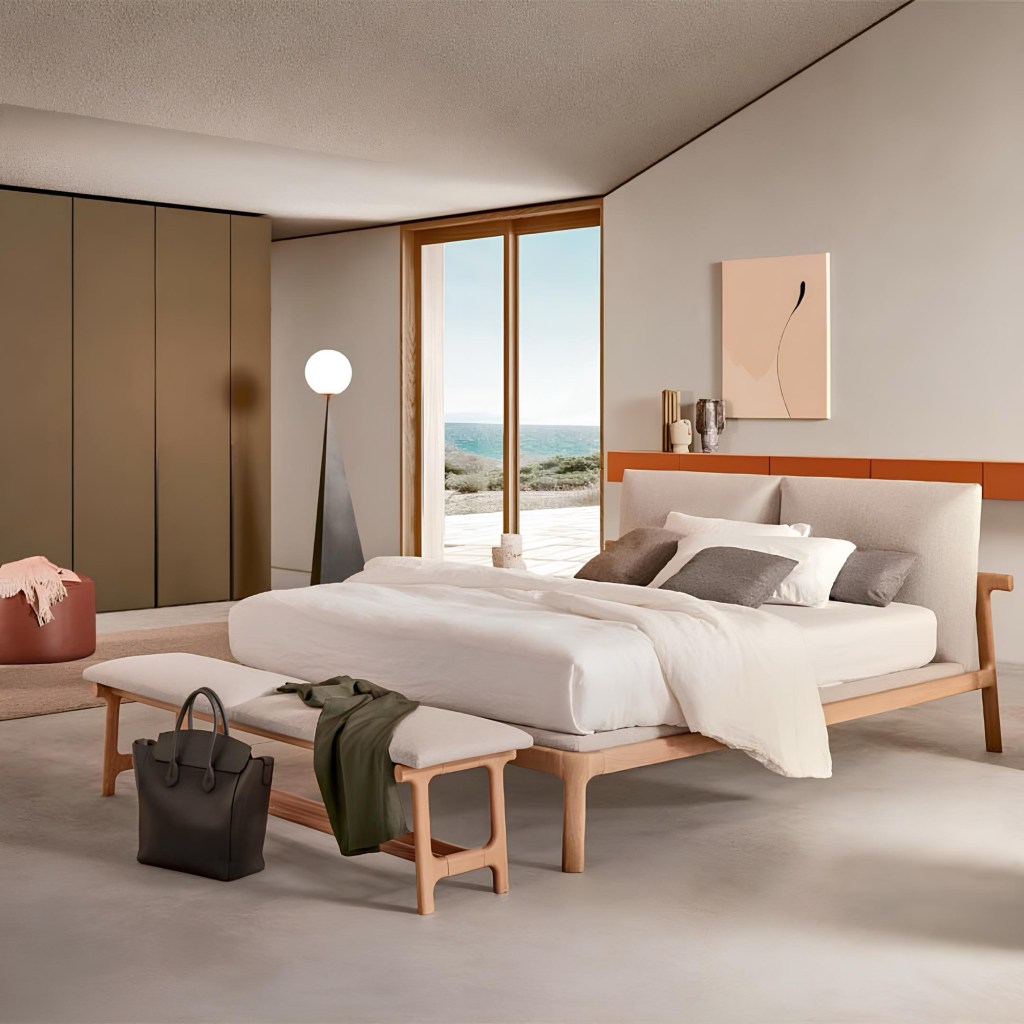
Product in the photo: Fushimi bed by Pianca
Think soothing, natural tones that mimic the world outside your window.
Neutrals: Whites, creams, soft grays, and warm beiges form the foundation.
Natural Wood Tones: Light to medium-toned woods (like bamboo, pine, or light oak) add warmth and texture.
Muted Accents: Introduce subtle pops of color with muted greens (like moss or sage), soft blues, or charcoal grays.
- Materials: Natural, Textured, and Authentic

Tactile quality is crucial. Embrace materials that feel good to touch and connect you with nature.
Wood: Unfinished or lightly stained wood for furniture, flooring, or wall accents.
Bamboo: Beautiful for accents, blinds, or even flooring.
Paper: Shoji screens (sliding paper doors or window coverings) provide diffused light and privacy.
Natural Textiles: Cotton, linen, hemp, and silk for bedding, throws, and curtains.
Ceramics & Stone: For decorative objects or small planters.
- Lighting: Soft, Diffused, and Intentional
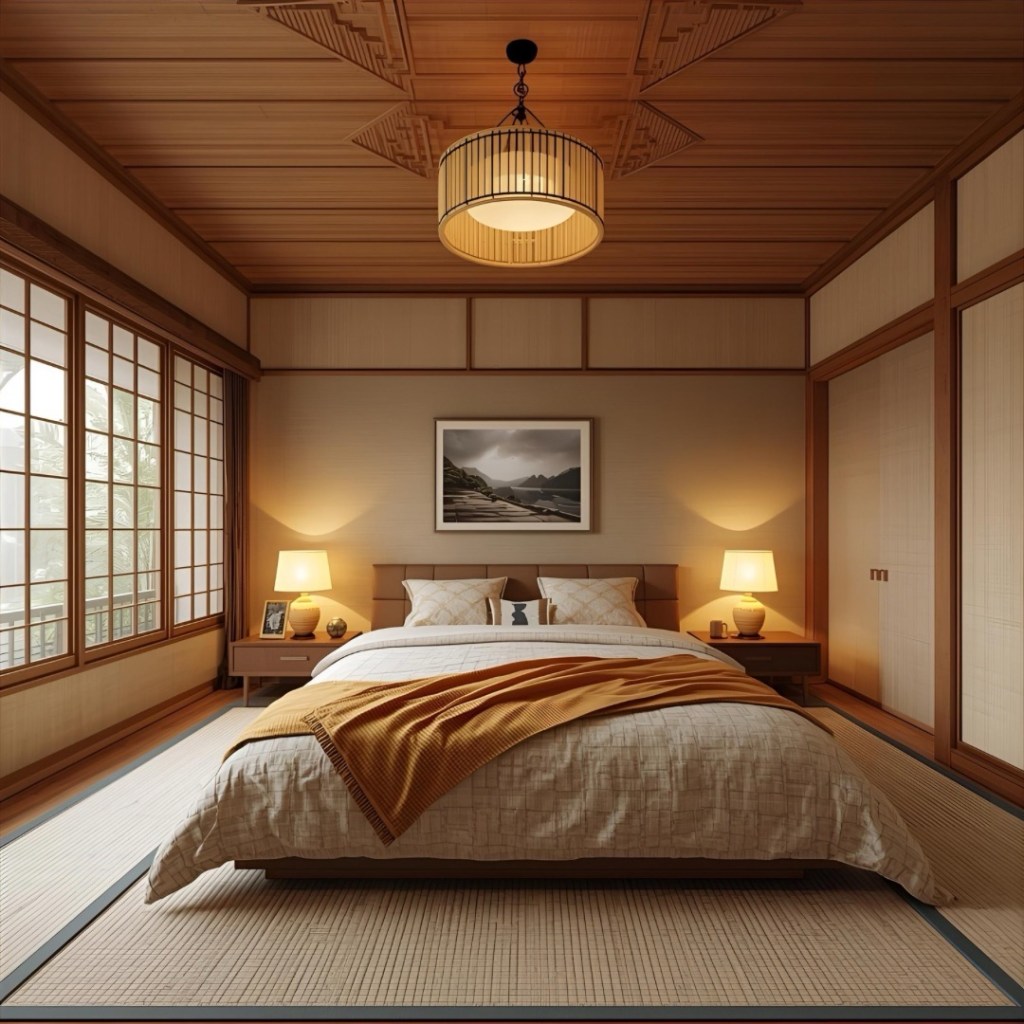
Harsh overhead lighting has no place here. The goal is to create a soft, calming glow.
Natural Light: Maximize natural light with sheer curtains or shoji screens that allow light to filter in gently.
Indirect Lighting: Use lamps with paper shades, rice paper lanterns, or sconces that cast a warm, ambient glow. Dimmers are your best friend.
Candles: Unscented or very lightly scented candles can add to the serene atmosphere.
- Furniture: Minimal and Functional
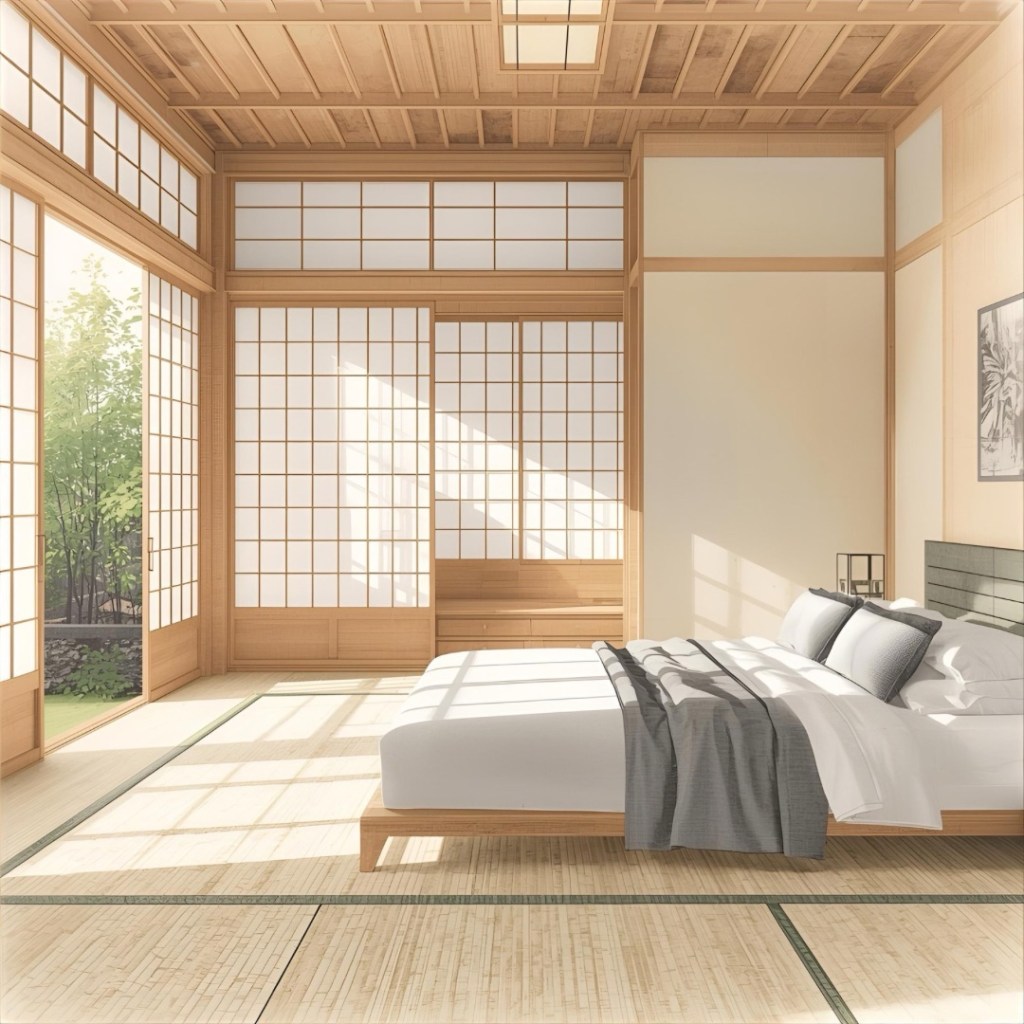
Every piece of furniture should serve a purpose and be low to the ground.
Less is More: Avoid overcrowding. A low platform bed, one or two minimalist nightstands, and perhaps a small, low bench or chest are often sufficient.
Hidden Storage: Incorporate clever, built-in, or discreet storage to keep clutter out of sight.
Clean Lines: Choose furniture with simple, uncluttered forms.
- Decluttering & Intentional Decor: The Art of Absence
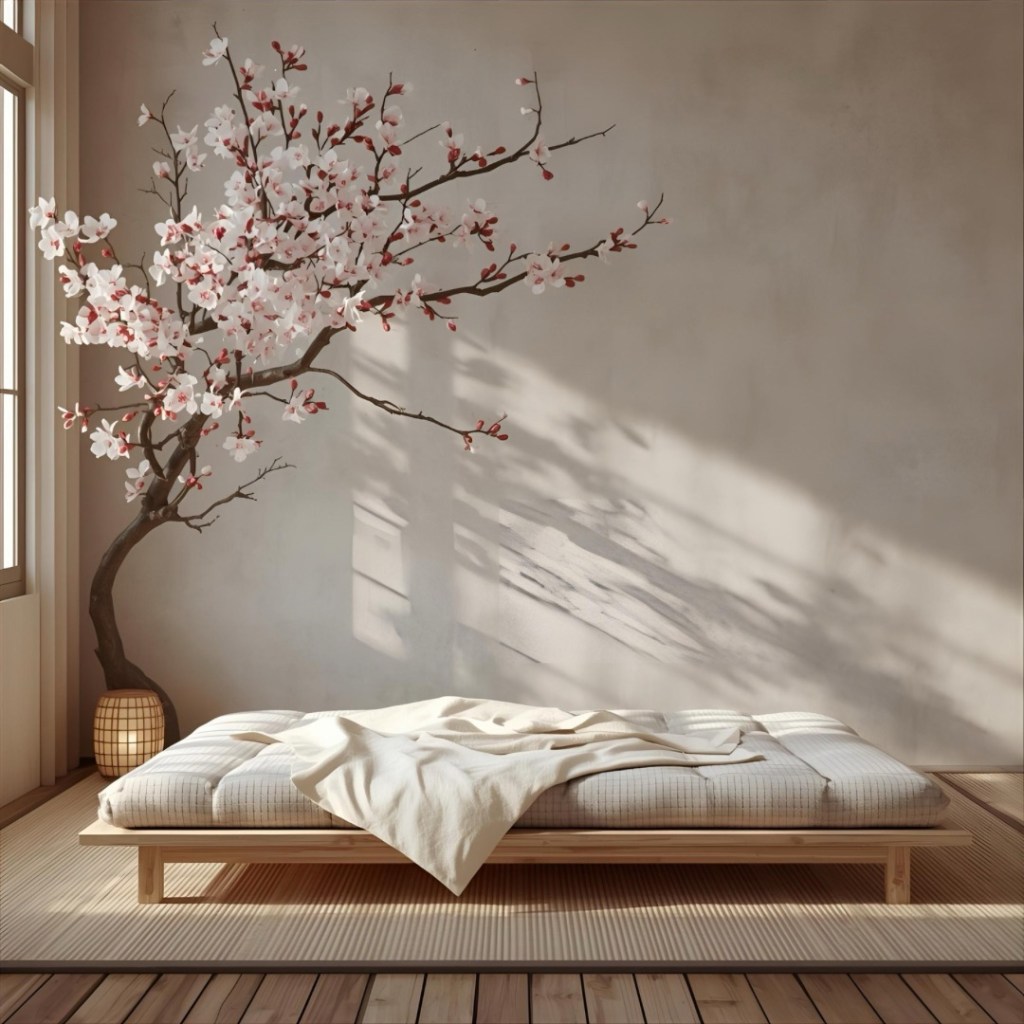
This is perhaps the most challenging, yet rewarding, aspect.
Purge ruthlessly: Remove anything that doesn’t contribute to calm or serve a clear function.
Focus on one or two meaningful pieces: A delicate bonsai tree, a single ikebana (flower arrangement), a simple ceramic vase, or a piece of abstract art inspired by nature.
No knick-knacks: Resist the urge to fill surfaces. Empty space is as important as occupied space.
Creating Your Own Zen Oasis
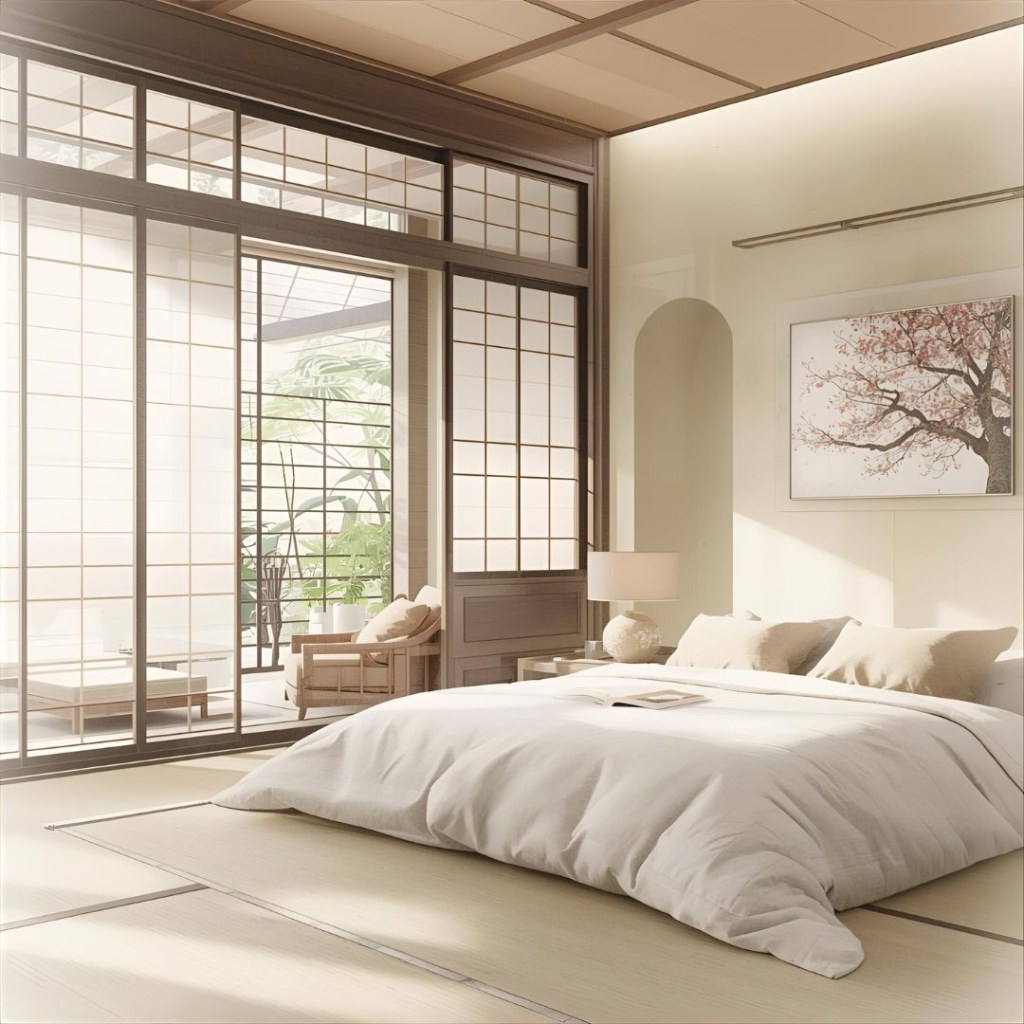
Embracing a Japanese-style bedroom isn’t just about aesthetics; it’s about cultivating a mindset. It encourages you to slow down, appreciate simplicity, and find peace within your own home.
Start small: declutter one corner, switch out a harsh lamp, or choose some natural cotton bedding. With each intentional choice, you’ll be one step closer to your own serene sanctuary, a place where you can truly unwind and recharge.
What element of Japanese design are you most excited to incorporate into your bedroom? Share your thoughts in the comments below!
If you liked my blog post “A Japanese-Style Bedroom” have also a look at Scandinavian Style Bedrooms



 Hygge Design
Leave a comment